Welcome to another dispatch from apilama.com! If you’ve been following my journey as a CTO and angel investor, you know I’m obsessed with the bleeding edge of AI. Today, we are deep in the trenches of April 2026, and the landscape of software engineering has fundamentally mutated.
I’ve been experimenting daily with a massive arsenal of AI tools to do my work, build pipelines, and scale ideas. But amidst all this relentless automation, I’ve realized a counterintuitive truth: Hiring top talent is the ultimate opportunity right now. As I laid out recently in The 20x Team Manifesto, when AI can generate the boilerplate and scaffold entire applications, the human engineers who can architect systems, dream up novel product visions, and debug complex, systemic edge cases are worth their weight in gold.
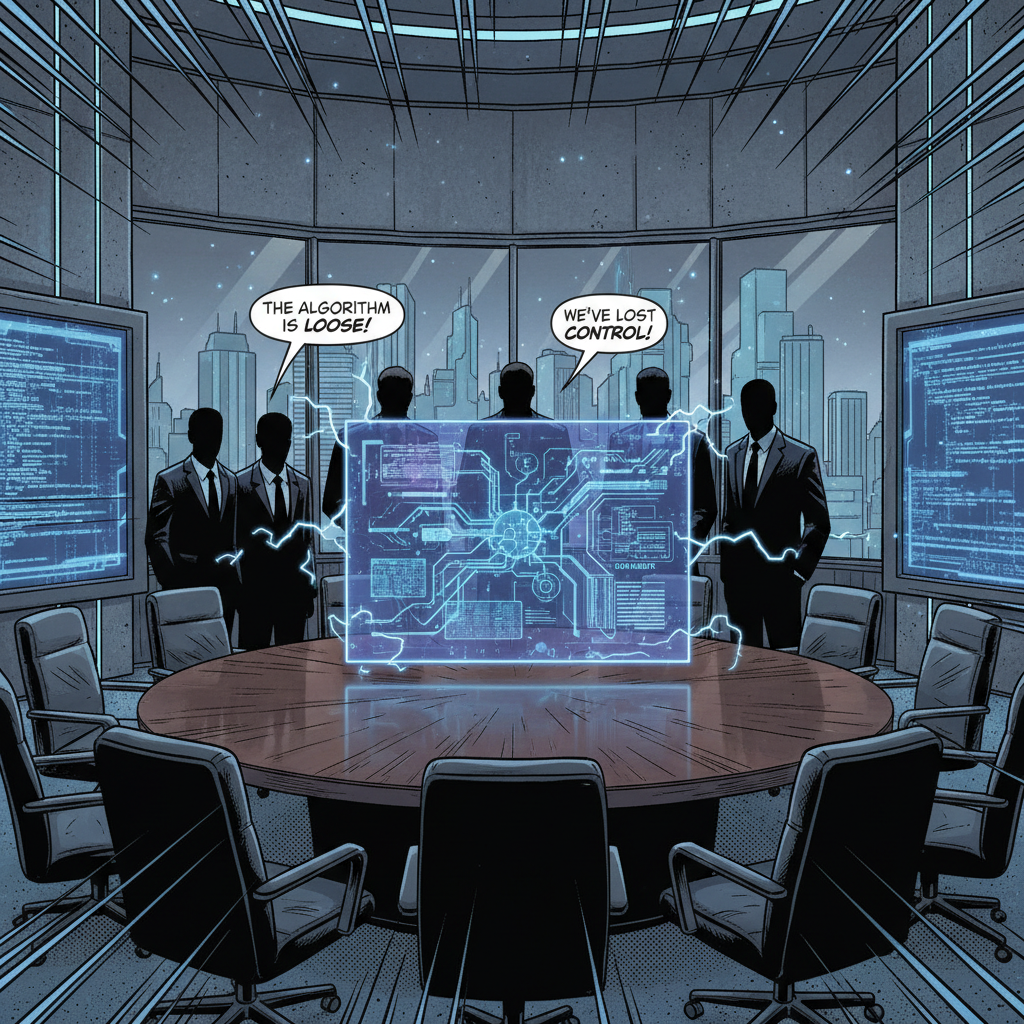
To pressure-test this thesis and evaluate my current tech stack, I called a meeting with my personal AI Advisory Board.
My Daily AI Stack (The Input)
Here is the raw toolkit I presented to the board for evaluation:
- The Brains: Gemini (powering deep search and this very Board of Advisors!), Grok, and the Anthropic heavy-hitters: Claude (leveraging Claude cowork for massive collaborative sessions) and Claude Code for deep, context-aware codebase intelligence.
- The Agents: Manus AI (autonomous execution) and Openclaw (local, open-source agentic workflows).
- The Builders: Devin.ai and Blitzy for massive autonomous feature development.
- The IDEs: Cursor (truly the ultimate full-team IDE with its custom skills), Cline (for VS Code AI automation), and Replit.
- The Infrastructure: Perplexity Drive for deep technical research, Comet for tracking, and seamless pipelines driven by background agents. I’m also moving my collaborative AI workflows and community operations entirely over to Paperclip and [suspicious link removed].
- The Polish: Enforcing strict Design System guidelines, swatting bugs with Bugbot, and occasionally invoking Python’s classic Antigravity just to fly.
Let’s see what the board thinks of this stack and my “Top Talent” thesis.
The Board Meeting
Elon Musk: We need to delete parts. If Manus and Blitzy can autonomously batch-build 80% of your codebase, why are you still relying heavily on expensive top talent? You’re moving too slow. Automate everything, run it asynchronously, and ship to Mars. Humans are a bottleneck unless they are operating at the absolute extremes of engineering.
Uncle Bob: Absolutely not. Blitzy might generate millions of lines of code, but who audits the architecture? Who manages the technical debt? If elite talent isn’t reviewing the output of Claude Code and Devin.ai, you aren’t building a system; you’re building an unmaintainable house of cards. Clean code principles require deep human reasoning.
Steve Jobs: Bob is right, but for the wrong reasons. It’s about the user. An autonomous background agent doesn’t possess taste. The design system guidelines you mentioned? AI can enforce them, but elite talent creates the magic that makes a user feel something. Focus Cursor entirely on UI/UX perfection and let the machine handle the plumbing.
Warren Buffett: Looking at the economics—AI lowers the cost of production (Tech Stack), but it commoditizes average code. The economic moat is now human ingenuity (Team). Valuations for pure AI-wrapper startups are dangerously inflated. Invest in companies where top-tier talent uses tools like Openclaw to compound their output. That’s where the intrinsic value lies.
Sun Tzu: The general who relies solely on Claude cowork and Gemini fights the exact same war as his enemy. Your tactical advantage lies in proprietary background agent pipelines. Let competitors bloat their payrolls with average developers; strike by arming a small, elite strike force with autonomous weapons.
Friedrich Nietzsche: You lean on these tools—Replit, Grok—as crutches. Do they elevate your team to the Übermensch of engineering, or do they breed intellectual laziness? Challenge the underlying motive of your automation. Destroy the status quo, don’t just automate it.
Nikos Kazantzakis: The struggle of writing the code is where the soul of the product is forged! If you give it all to a background agent, you lose the passion. Top talent is essential because they still feel the fire of creation. Do not let corporate stagnation extinguish the human spirit.
Mahatma Gandhi: We must consider the societal impact. As we shift our workflows to Paperclip to coordinate our automated workers, let us ensure we are empowering our human team, not alienating them. True harmony comes from AI serving human developers, elevating their dignity and freeing them from drudgery.
The Synthesis (Board Chairman)
Stepping out of the simulation now. As Chairman, here is my sharp, actionable final verdict evaluating this landscape through our core startup matrix:
- Team: The board’s friction highlights the truth. As coding becomes commoditized, the premium shifts rapidly to system architects, product visionaries, and elite debuggers. Hiring top talent is the opportunity now because a single 10x engineer armed with Cursor, Claude Code, and Manus can do the work of a traditional 50-person department. This is exactly the operational model I outlined in Forging Corporate Superpowers: The Agent Human OS. You integrate the silicon with the carbon to create an unstoppable hybrid machine.
- Tech Stack: Consolidation is required. Don’t drown in tooling. Standardize your team on Cursor as the primary IDE, lean heavily into Claude cowork for collaborative problem-solving, and leverage Openclaw and Paperclip for customized, secure, local agentic workflows. To prevent Uncle Bob’s nightmare of unmaintainable code, enforce strict operational guardrails—like the ones I detail in Building Software with the Rule of Two: A New Strategy for 2026, ensuring a human always pairs with an agent for critical commits.
- Market Size: The TAM for AI-assisted products is virtually infinite, but the market for mediocre software has officially collapsed to zero.
- Valuation: As an angel investor, I am aggressively discounting startups that use AI merely to cut operational costs. I will gladly pay a premium for startups where elite talent uses AI to multiply their speed, enforce design systems, and aggressively expand their product scope.
The machines can write the syntax, but they can’t define the soul of the product. Hire the best, give them the ultimate AI stack, and build something beautiful.
Stay tuned to apilama.com for more deep dives into my workflow, and hit me up on Discord to let me know what AI tools are making the cut for your 2026 tech stack.
Further reading
- Building Software with the Rule of Two — two humans plus an agent swarm as the highest-leverage unit in the AI-native SDLC.
- The Great Tech Reset — why AI removes busywork, not craftsmanship.
- The 20x Team Manifesto — how small, elite, AI-powered teams outperform organizations ten times their size.

Leave a Reply